The Role of Computer Vision in Waste Management
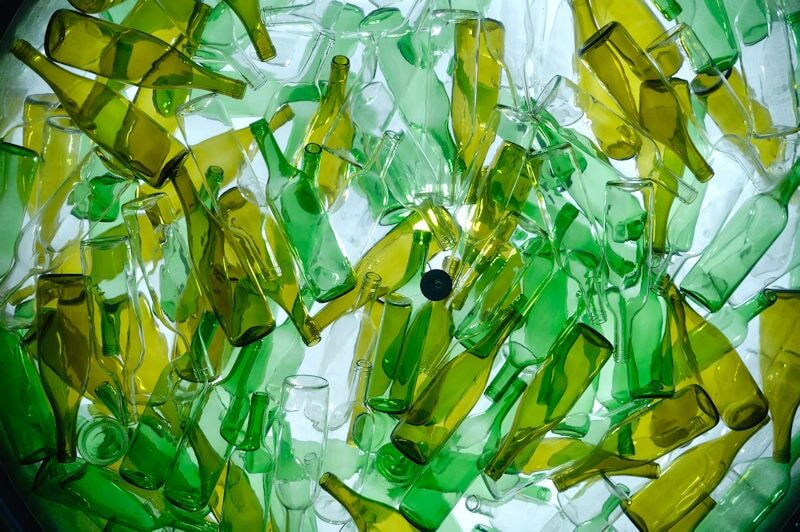
Computer vision plays a vital role in many modern recycling technologies. We’ve pulled together a few interesting examples to demonstrate how developments in imaging support waste management.
Remanufacturing a Greener Product Lifecycle
Refurbishing used equipment back to its original condition, or remanufacturing, is becoming more common in the drive towards a circular economy.
The Fraunhofer Institute for Production Systems and Design Technology (IPK) has engaged in the KIKERP project to determine if appliances such as washing machines and refrigerators are suitable for recycling or refurbishment. Manufacturing employees input the product date into a mobile app, then collect multiple images of the product. A pre-trained AI model then determines the condition of the appliance using a scale from 1 to 5 to enable decisions on whether to repair and return the item to the market, or dismantle it for recycling.
Urban Mining
This is the term used to describe the extraction of valuable metals, such as gold, silver, and copper, from discarded electronic devices.
HIRO Robotics uses computer vision systems in its solutions such as TEIA for TV and monitor disassembly and NISA for printed circuit board sorting. These solutions leverage AI-powered vision to identify, classify, and process electronic waste with high precision. Cameras enable the robots to adapt to various devices and components in real time, making automated urban mining and e-waste recycling more efficient and flexible.
Optimizing Recycling using AI and Computer Vision
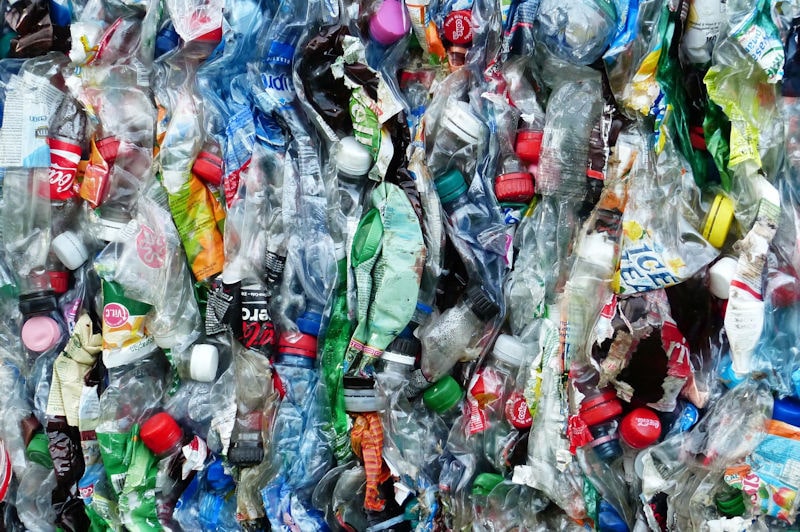
Several companies have developed solutions specifically for optimizing recycling. The color-sorting system from AMP Robotics is AI driven and separates green and opaque plastic bottles from clear ones at Everdale’s recycling facilities across the US. The vision system feeds data to the robotic arm, which can pick up to 120 bottles per minute. Their AMP Cortex system can also be used to identify cardboard, metals, wood, concrete and other materials for recovery.
Recycleye is another company mixing computer vision, AI and robotics to create advanced recycling systems and commodify waste. Recycleye Vision scans waste and identifies materials across 28 different classes, while Recycleye Qualibot can make 33,000 picks in a 10-hour period. Their platforms enable Materials Recovery Facilities to extract larger amounts of quality recyclable material, delivering both environmental and financial benefits. The company advocates that automating material sorting allows for greater accuracy in separation and much greater volumes of rubbish to be processed.
Widening the Spectrum
Hyperspectral and multispectral imaging are now being deployed to assist in the trash identification process. Plastics differ greatly in their chemical compositions and NIR and SWIR imaging is ideal for evaluating these characteristics and selecting the required type of plastic.
Tomra positions itself as the developer of the world’s first high-capacity near infrared (NIR) sensor for waste sorting applications. HySpex is also active in this area, using a hyperspectral camera covering the spectral region of 930-2500 nm to identify different grades of paper and card for recycling, from glossy magazines to egg boxes and everything in between.
In 2023, a Danish team from Aarhus University (AU), the University of Southern Denmark (SDU), and Newtec Engineering A/S secured funding for developing a high-resolution, hyperspectral camera capable of imaging a spectral range from 400nm to 1,900nm with a desired resolution of only 2nm. The aim is to operate a spectral resolution and range high enough for the camera to reveal unwanted fire retardants and pigments in the plastic. These constituents are particularly harmful and identifying them will ensure they don’t enter the recycling chain.
High-quality Image Processing
Computer vision is proving to be a key instrument in the toolbox for monitoring and managing waste. Active Silicon is a provider of world-leading computer vision components and image processing software. Find your vision solution for optimizing recycling and waste management systems.