End-to-End Project Management: Getting it Right
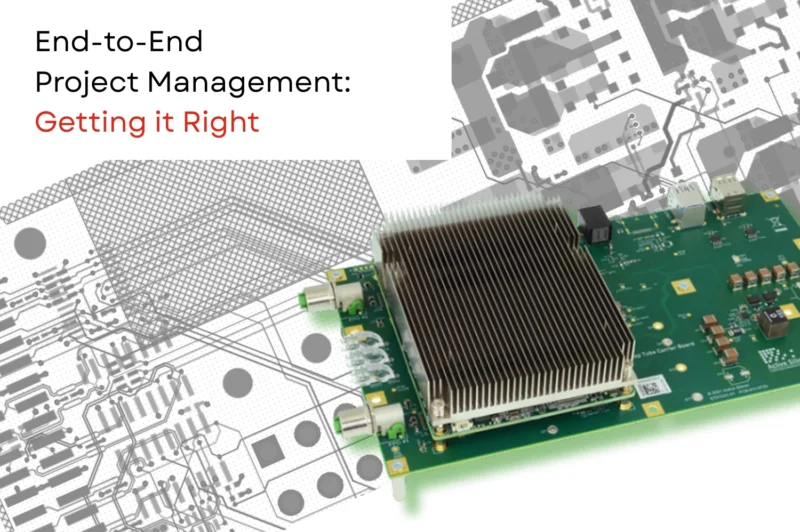
Building vision systems for industrial, surveillance, medical or automated environments requires diligent planning, rigorous testing and expert oversight. Active Silicon has experience and agility to support complex projects – here’s our advice.
Planning
Firstly, it’s critical to fully understand the project’s requirements and scope. Not just what’s required, but what is it needed for – what problem are we solving, what needs to be achieved? This is where we may discover that the customer’s proposed solution can be improved using expertise or technology they may not be aware of.
Timescales are also essential. Are there sufficient contingencies built into the planning pipeline? Are extra resources or stock going to be required to deliver results on time, and are these going to be available as and when needed? What are the implications of delay from either the customer or developer, and how can these risks be mitigated? Robust planning at this stage will save nasty surprises later.
Consider system compatibility. There will be legacy hardware and software which the new system will have to integrate with. Planning this into the build at an early stage will ensure this is possible and achievable with minimum custom configuration and downtime.
The new Cyber Resilience Act (CRA) will affect cyber security protocols for goods being sold in the EU. For computer hardware, the CRA requires stronger default security, better documentation, vulnerability handling, and lifecycle support. Without being CRA compliant, companies won’t be able to sell into many markets, so this is an important consideration.
Component Selection
Project management involves sourcing suitable components and managing the overall supply chain. That means being sure of the compatibility of all the elements planned for integration. As a simple example, all components must be able to run on the same OS.
Vision system designers must be aware of lead times and shortages. Global shortages of chips and RAM have had significant impact on project builds in recent times, and planners may need to consider alternative solutions if such situations arise.
System Design
There are many stages of design and each is likely to separately gated. However, to speed up the design process, it may be possible in some cases to run multiple gates in parallel. The risk with this, of course, is that changes to one element of design may mean re-doing work in other elements.
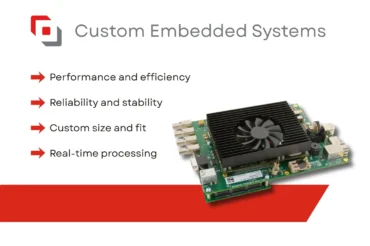
Project managers must understand the size, weight and power constraints of the overall system as many physical factors will influence the success of design work. Custom engineering may be required if hardware must fit into a particular space, run on limited power or conform to a maximum weight. Rapid prototyping can assist in refining form and fit.
It’s also important to understand the lifecycle expectancy of the vision system. For example, medical systems are designed with longevity in mind as future changes may require re-certification and extensive validation. On the other hand, designing systems for one-way attack drones, for example, do not need to factor in such resilience.
Testing
During system development, a prototype should be built and tested as early as possible to identify unforeseen problems before full production. Prototyping also allows the team to check that the vision system performs correctly in real-world conditions, such as different lighting, movement, and environmental interference, before committing to the final design.
The project team needs to decide what testing is required. EMC (electromagnetic compatibility) and other compliance checks may be needed to meet industry standards, CRA criteria and other regulations. It should also be decided whether these tests can be carried out in-house or if a specialist test house is needed as external facilities will need to be booked.
As it’s not unusual for prototypes to fail the first round of testing, extra time should be included in the project plan for redesign, rebuilding, and retesting so that delays do not affect the final deadline.
Lifetime Support
Ongoing support should be planned from the start of the project to ensure the vision system continues to operate reliably after installation. This includes managing firmware and software upgrades, providing maintenance, and offering technical support in the event of faults occurring.
Future-proofing the system is a key consideration in the early part of the project. The team must plan for potential challenges such as component shortages or end-of-life (EOL) parts, ensuring alternatives can be selected to avoid downtime.
Security is another key consideration, with updates and upgrades applied to protect the system from cyber threats.
Time, cost and ultimate responsibility for all these tasks should be clearly written into the overall project plan.
Possible Challenges
Overcoming common challenges and mitigating risk is a key element of managing the design project. These may include:
- Cost – contingency costs must be factored into the project to allow for unforeseen expenses.
- Component shortages – robust planning for supply chain and obsolescence management can prevent delays to a project.
- Skills resource – ensure the skills to implement and maintain the system are in place through personnel selection and training.
- Succession planning – document everything and plan for ongoing knowledge sharing to prevent skills gaps in the future.
Active Silicon’s Project Management Expertise
Our team has decades of experience in managing system design, build and support.
- Hardware design
- FPGA capabilities
- Schematics
- PCB design
- Software skills
- Firmware expertise
Rapid prototyping, precise manufacturing, robust testing and proven supply chain management all factor into our custom design success.
Take a look at our areas of expertise in bringing vision systems from conception to reality.