Discover the Advantages of IP Autofocus-Zoom Cameras
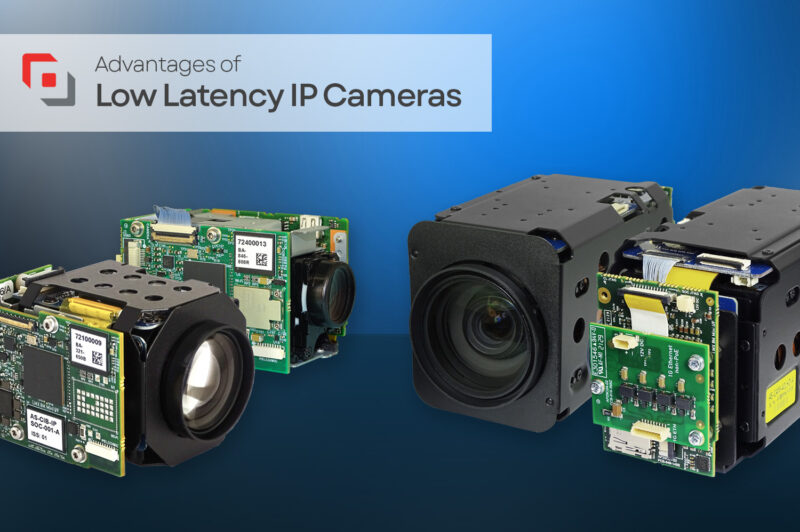
With network connectivity, IP cameras allow real-time remote access and centralized management. Their high-resolution sensors and intelligent processing make them ideal for complex security, defense and industrial applications.
How an IP Camera Works
An IP camera captures optical data through its lens and image sensor, converts it into a digital video stream via an onboard image signal processor (ISP), and transmits the encoded data over an IP (Internet Protocol) network using standard protocols such as RTSP or ONVIF. IP cameras send compressed video streams (such as H.264 or H.265) via wired Ethernet or Wi-Fi for easy access and storage. Many autofocus-zoom IP cameras also feature built-in processors that handle tasks like image adjustment, motion detection, and network communication. Power and data often run through a single cable using Power over Ethernet (PoE), making fitting and deployment easy.
Combined with autofocus zoom functionality, an IP block camera offers a compact, high-resolution imaging solution.
Key Considerations in Selecting an Autofocus-Zoom IP Camera
Technical specifications play a critical role in system performance and integration.
Autofocus and Zoom
Optical zoom and autofocus modules provide dynamic control over focal length and image sharpness, ensuring optimal focus across varying distances without manual recalibration.
Sensor
High-resolution sensors (e.g. 4K, 1/1.8″ CMOS) capture greater detail and improve digital zoom usability, while WDR (Wide Dynamic Range) and advanced image signal processing maintain clarity in high-contrast lighting environments. Low-light performance is enhanced by larger-aperture lenses, back-illuminated sensors, and integrated Infrared (IR) LEDs, enabling 24/7 monitoring without sacrificing image quality.
Compliances
From a system integration standpoint, compliance with standards such as ONVIF, RTSP, and HTTP(S) ensures interoperability across NVRs, VMS platforms, and third-party analytics software.
Power over Ethernet
Power over Ethernet reduces infrastructure complexity by combining data and power delivery through a single CAT5e/6 cable, while gigabit Ethernet interfaces support high-bitrate streaming.
Housing
For outdoor or industrial environments, cameras can be housed in IP66/IP67-rated enclosures to protect against harsh conditions.
Video Processing
Additionally, onboard video analytics and edge AI processing minimize network load and latency by handling event detection locally.
Together, these features define a high-performance IP camera system that meets the reliability, scalability, and precision demands of modern networked video applications.
How to Reduce Latency in IP Vision Systems
Image capture and video data transmission over an IP network will always be subject to latency due to unavoidable acquisition, transport and processing delays between various system components. We have a blog and technical note explaining how latency enters a vision system and how to set up components to minimize it.
Harrier IP cameras with a Harrier Camera Interface Board leverage high-quality components to optimize for providing low-latency video. In addition, they offer a special low-latency configuration. Some other AF-Zoom block cameras, including Tamron and Sony cameras, have low-latency modes as well. The technical note also includes measured latency for all our Harrier IP AF-Zoom camera modules.
Where are AF-Zoom IP Cameras Used?
IP cameras are widely used across multiple sectors for high-quality, reliable video capture. In commercial security and military surveillance, they provide real-time monitoring, often integrating with access control and alarm systems to enhance situational awareness. Traffic management and smart city applications use IP cameras for vehicle counting, license plate recognition, and congestion monitoring, where autofocus-zoom capabilities allow clear identification from a distance.
In industrial facilities, IP cameras enable remote inspection, equipment monitoring, and progress tracking, reducing the need for on-site personnel and minimizing safety risks. They are also employed in broadcasting and live streaming, capturing high-definition footage for events and meetings. In critical infrastructure monitoring, such as power plants, airports, and water treatment facilities, ruggedized IP AF-Zoom cameras with wide dynamic range, low-light performance, and even AI-based analytics ensure continuous surveillance under challenging environmental conditions.
Overall, the adaptability of IP cameras makes them a versatile tool across both traditional security and emerging smart-monitoring applications. Explore our range of Harrier AF-Zoom IP Cameras and find your perfect network imaging solution.