CoaXPress over Fiber: 100 Gbps Image Acquisition
What does CoaXPress over Fiber (COF) mean for the design of the next generation of high-performance imaging systems?
In our CoaXPress over Fiber video, we take a closer look at the technology, explaining how it can address some of the practical challenges created by increasing camera speeds and image data volumes.
The video explores the advantages of fiber for machine vision, including exceptional bandwidth, advanced triggering and reliable operation in electrically noisy environments. Fiber also enables much longer cable runs than copper connections, with cameras potentially located several kilometres from the host system, depending on the optical transceiver used.
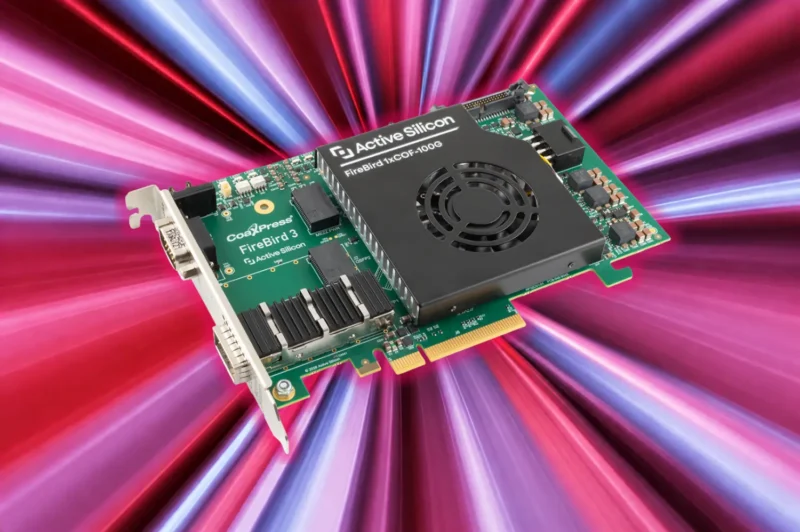
Central to the video is our latest FireBird 1xCOF100G-4PE8 CoaXPress over Fiber frame grabber. Its QSFP28 interface supports up to 100 Gbps across four 25 Gbps lanes, while a PCI Express 4.0 x8 interface transfers high-resolution image data into the host PC in real time.
Bandwidth is only part of the story
As the video explains, CoaXPress over Fiber brings together several capabilities that matter when designing demanding machine vision systems. Alongside high data rates, fiber enables long transmission distances and provides immunity to electromagnetic interference. This helps maintain reliable connectivity in electrically noisy industrial environments.
The video also highlights the wider FireBird platform, where image acquisition is considered as part of the complete vision system rather than in isolation. High-speed data transfer sits alongside flexible triggering, I/O and camera control, giving system designers the tools to address increasingly complex imaging requirements.
Active Silicon was one of the primary authors of the international CoaXPress standard and continues to apply that first-hand expertise as the technology evolves towards CoaXPress v3.0.
Watch the video on our website or YouTube channel to learn more about FireBird CoaXPress over Fiber and how 100 Gbps connectivity can support the next generation of high-speed imaging systems.